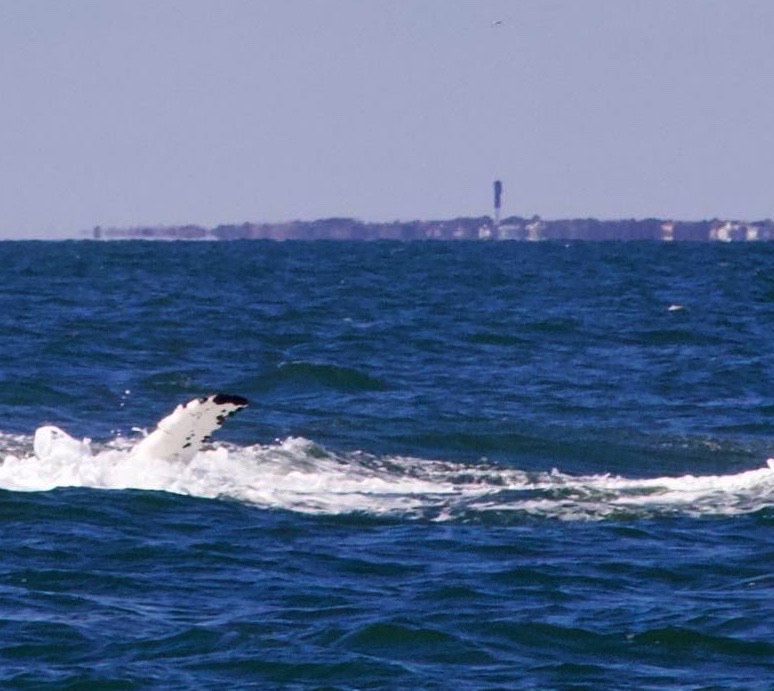
Humpback whale feeding off IOP (Isle of Palms) yesterday! They are not uncommon to be off our coast during their seasonal migrations but don’t typically come so close. Pretty cool!


5 Whales Stranded on Edisto
Submitted by Lauren Rust, Lowcountry Marine Mammal Network
If you haven’t heard about the pilot whales yet, we had a mass stranding (5 whales) that stranded alive on Edisto Saturday morning. This comes on the heels of 50 pilot whales that stranded in GA in July, followed by an additional 20+ last week in Brunswick. 15 died in Brunswick and another 8 were seen swimming in a small inlet but never stranded. Through matching their dorsal fins, we were able to confirm that the 5 whales from Edisto were part of the 8 they had been seen in GA last week. I was a first responder on Saturday and was the only one onsite for about 2 hours before relief came. It was heartbreaking because there was nothing we could do for the whales by that time and three had to be euthanized (one died on its own). In some cases like this, whales can be re-floated back to sea, if people find them quick enough. These animals had been on the beach for several hours (if not overnight) before anyone found them. Laying on the beach that long can cause irreversible organ damage due to gravity. Dehaydration had probably set in by that time as well. For those reasons, a local vet from Charleston assessed them and euthanized them. A 5th whale was seen just offshore all morning, later seen circling in a tidal pool, stranded around 4pm and pushed back by people, never to be seen again. We have a debrief this Friday to discuss what’s going on. So far, the necropsies from about 7 of them have shown nothing grossly, and additional tests are pending to rule out biotoxins, diseases, trauma. Two of the animals from Edisto were CT scanned at ther aquarium yesterday (heads only) to look for possible trauma (for ex. they can have shattred ear bones if exposed to loud sonic booms), which would cause disorientation and a possible explanation of stranding. Some viral infections can also cause disorientation. These animals typically live 100 miles offshore in very deep water (1000 meters or more) so we’re trying to determine what’s bringing them so close to shore. Pending tests could take several week or more for results. It’s not uncommon for pilot whales to mass strand. They are socail animals and swim in large pods (50-100 individuals), and sometimes if one individual (a leader maybe) is sick, the whole pod will follow that animal, even if it means close to shore. Once close to shore, the shallow water, currents and tides can confuse them since they are used to be in very deep water. This could cause them to get stuck, strand, etc. This is why we sometimes re-float the animals because often many of them are healthy but got disoriented.